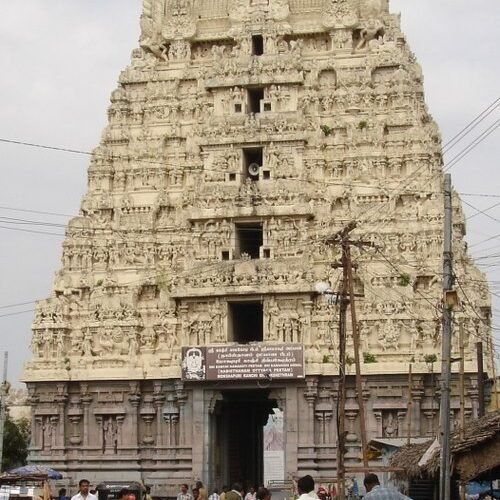
Temple Identity and Divine Features
Detail Description
Common Name Vanamamalai Perumal Temple, Nanguneri Divyadesam
Moolavar (Main Deity) Sri Thothadri Nathan / Vijayasanar (The Victorious Lord)
Posture Sitting Posture, facing East, with Abhaya Hastham (blessing gesture)
Thayar (Consort) Varagunamangai Thayar / Sreevaramangai Nachiyar
Utsava Perumal Deivanayakan
Vimanam (Tower) Nanda Vimanam
Pushkarini (Holy Tank) Indira Pushkarini (Sesha Theertham)
Kshetram Title Thothadri Kshetram
🔑 Unique Spiritual Significance
- The Unique Oil Abhishekam (Thailakaapu)
The most distinctive feature of this temple is the unique daily ritual performed for the Moolavar:
• Abhishekam (Holy Bath): The idol of Sri Thothadri Nathan is anointed with 4 measures (Marakkals) of specially purified sesame oil (gingelly oil) every day.
• The Oil Pit: The used oil is collected in a large well or pit near the sanctum. This pit is believed to contain over 7,000 liters of oil that has accumulated over centuries.
• Sacred Oil: This oil, mixed with medicinal herbs and consecrated by daily worship, is considered highly sacred and is distributed to devotees as Prasadam. It is believed to have curative properties and should never be heated or used for cooking. - Nammalwar’s Final Destination
• Moksham Site: Thiruvaimozhi Nammalwar, one of the foremost Azhwars, is believed to have attained Moksham (union with the Lord) in this Divyadesam.
• Reverence: Nammalwar himself composed 11 pasurams (hymns) in praise of the Lord here, highlighting the temple’s significance. - Worshipped by Devas and Rishis
• Indra’s Worship: The Pushkarini is named Indira Pushkarini because Lord Indra performed penance here to absolve himself of sins (Indra Dosham) acquired from a curse by the Sage Gautama.
• Thothadri Kshetram: The name Thothadri refers to the holy hill where the Lord resides, reflecting the ancient scriptural status of the site. - The Sitting Posture (Vijayasanar)
The Lord, known as Vijayasanar (The Victorious Lord), blesses devotees in a Sitting Posture—a powerful form believed to bestow success and victory upon worshippers.
Thiru Sreevaramangai stands as a monument to divine victory and eternal devotion, drawing pilgrims to witness its unique worship and seek the blessings of Nammalwar’s final abode.
🏞️ Sthala Puranam: The Lord of the Hills (Thothadri)
The primary legend surrounding Thiru Sreevaramangai involves Lord Vishnu’s manifestation on a small hillock, which gave rise to its classical name, Thothadri (Thoth = Holy, Adri = Hill).
• Indra’s Absolution: The King of Devas, Lord Indra, was afflicted with a curse (Indra Dosham) from the Sage Gautama. To seek remedy, Indra was advised to perform penance here. He bathed in the sacred tank, which henceforth became known as Indira Pushkarini (also called Sesha Theertham).
• The Lord’s Appearance: Pleased with Indra’s penance, Lord Vishnu manifested here in His glorious form, seated regally in a posture of victory, earning Him the name Vijayasanar (The Victorious One). The Lord is believed to bless those who worship Him here with success in all their endeavors.
• The Name Sreevaramangai: The name Sreevaramangai signifies the Goddess Sreevaramangai Nachiyar (Sree meaning Lakshmi, Vara meaning blessing/boon, Mangai meaning Goddess), indicating this is the place where the Goddess resides and grants boons.
II. 🏺 The Unique Ritual: Thailakaapu (Sacred Oil Anointing)
The most striking and widely known practice at Nanguneri is the continuous Abhishekam (anointing) of the Moolavar, Sri Thothadri Nathan:
• Daily Anointment: Every day, the Moolavar is bathed with four measures (Marakkals) of purified sesame oil (gingelly oil). This continuous bathing ritual, known as Thailakaapu, is believed to protect the stone idol from corrosion and keep it cool, symbolizing the Lord’s continuous cooling and protection of the cosmos.
• The Oil Well (Thaila Kinaru): The oil used in the daily Abhishekam is meticulously collected and directed into a large, sacred well/pit situated near the sanctum. This pit contains an immense, centuries-old accumulation of sanctified oil, believed to be over 7,000 liters.
• Medicinal and Spiritual Value: This oil is not waste; it is revered as a powerful Prasadam (offering). It is enriched by the Lord’s divinity and is often mixed with herbal extracts, believed to cure various ailments and bestow spiritual merit upon devotees. It is strictly advised to use the oil externally and never for consumption or heating.
III. 🪷 Connection to Nammalwar (Thiruvaimozhi)
• Final Destination: This temple holds a deep connection to Nammalwar, one of the 12 Azhwars, and is celebrated as his site of Moksham (final liberation).
• Pasurams: Nammalwar immortalized this temple by composing 11 dedicated pasurams in his great work, the Thiruvaimozhi, praising the Lord’s grace and form at Sreevaramangai. It is believed that worshipping the Lord where Nammalwar attained salvation helps devotees along their own spiritual path.
IV. 🕊️ Other Unique Temple Features
• Deivanayakan (Utsavar): The procession deity, Deivanayakan, is highly revered and actively participates in the area’s festivals.
• Agamam: The temple follows the Pancharathra Agama tradition of worship.
• Thirumanjanam Rarity: Due to the perpetual Thailakaapu, a full Thirumanjanam (water bath) for the Moolavar is performed only once a year, usually in the Tamil month of Panguni.
Thiru Sreevaramangai is thus a unique blend of ancient legends, powerful Rahu/Ketu related worship (as it’s often grouped with the nearby Irattai Tirupati), and an extraordinary living ritual involving sacred oil, making it a key stop on any Pandiya Naadu Divyadesam pilgrimage.
Thiru Sreevaramangai Divyadesam: The Abode of Vijayasanar (Nammalwar’s Final Resting Place) 044 – 2464 1670
For personalized travel arrangements, customized pilgrimage itineraries, or immediate assistance, you are directed to:
Rengaha Holidays
• Website: https://renghaholidays.com/
• Contact: 7708894141
RECENT POSTS
CATEGORIES
108 Siddhargal (19)
12 Alvars (4)
12 Jyotirlinga (16)
276 Shivalaya (256)
52 shakti peetham (48)
52 shakti peetham (18)
63 Nayanmars (61)
9. The six systems of Hindu Philosophy ( shad Dharsanas ) - Nyaya, Vaisheshika , Samkhya , Yoga , Mimamsa , Vedanta (1)
Ahobilam, Thirupathi yatra (0)
All (131)